Lipids
Defining the Lipid
- A insoluble non-polar macromolecule produced by enzymes
Use cases for lipids
- Long term energy storage
- Phospholipid membrane formation
- Hormone communication
Fatty Acids

Fats
- glycerol + 3 fatty acids
triglyceride (fat)

Animal vs Plant Fats
- Animal fats are typically saturated while plant fats are typically unsaturated
Phospholipids
- glycerol + 2 fatty acid + phosphate group (polar)
phospholipids

Properties
- Phospholipids have a hydrophilic head, hydrophobic tail
- Because of this dual nature, it is said to be amphipathic
- Think: - where have you heard this before?
- Because of this dual nature, it is said to be amphipathic
- The cell membrane is made of a bilayer of phospholipids
- This traps all fats inside, stuck between both heads
- Sometimes the head can also feature other polar molecules, but phosphate groups are always present
- Water can sometimes get through this highly hydrophobic layer, either through a small opening, or a hydrophilic pore created by a enzyme
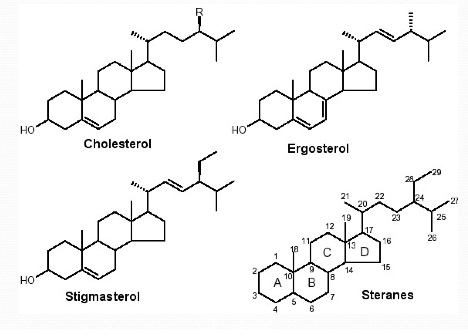
Steroids
- Typically found in a 4 ring structure (3 hexagonal rings, 1 Pentagon):